
How to Search Washington County Warrants
The Sheriff's Office posts an active warrant list for the county. It is a public table you can scan or filter, depending on the page version. The county also reaches the list through the Sheriff's "Wants and Warrants" page. Because warrants change as they are served or recalled, treat the list as current-as-of-update, not minute-to-minute. The Sheriff can only speak to warrants the office is responsible for, so out-of-county or out-of-state warrants may not appear.
Have a full name ready, and a date of birth if you know it, to tell apart people with similar names. Then move through the steps below.
- Open the Washington County active warrant list.
- Search or scan by last name, then full name.
- Note the warrant number, charge, and issuing agency.
- Confirm the result with the Sheriff or the issuing court.
- Speak with an attorney before you act on a result.
You can also reach warrant information from the Sheriff's wants and warrants page. Never assume an online list is current enough for a legal decision. The Sheriff's Office also notes that it does not issue protection or restraining orders, since those are court processes, and it can only answer for the warrants it holds.
Washington County Warrant Search Fields
The active warrant page is built around a table of warrant rows. Depending on the version, you may be able to sort columns or type a name filter. The fields below describe what the page exposes when you search for Washington County warrants.
| Field Label | Type | Required | Notes / Format |
|---|---|---|---|
| Warrant list / table | Table | No | Public rows of active warrants. |
| Search / name filter | Text | No | Use last name or full name if the page offers a filter. |
| Sort columns | Column controls | No | Name, warrant number, charge, date, or agency may sort. |
| Details / row | Link or row | No | Some rows show detail directly in the table. |
What a Washington County Warrant Record Shows
A public warrant row carries the basics of who is wanted and why. It names the person, the warrant, and the charge, and it may show the issuing agency and the date. Bond can appear where it is public. The list below covers the fields you can expect on a Washington County warrant record.
- Name - the person named in the warrant.
- Warrant number - the warrant or case reference.
- Charge or offense - the reason for the warrant.
- Issuing agency or court - who requested it.
- Date issued - the warrant date.
- Bond - amount or status, where public.
- Warrant type or status - active, served, or recalled.
Sealed warrants and juvenile warrants may not appear at all. A blank result does not prove there is no warrant.
Types of Warrants
Not every warrant means the same thing. Some come from a new criminal charge. Others come from something that happened inside an existing case, like a missed court date or an unpaid fine. The terms below come up most often on a Washington County warrant search.
- Arrest warrant
- A court order to arrest a person for a charged offense.
- Bench warrant
- Issued by a judge, often when a person disobeys a court order.
- Failure to appear (FTA)
- Issued when a person misses a scheduled court date.
- Failure to pay
- Issued over unpaid fines, costs, or restitution.
- Capias
- A warrant commanding arrest, often after a failure to appear.
- Probation warrant
- Issued when a person may have broken probation terms.
The warrant type shapes what comes next. A failure-to-pay warrant may clear once the balance is handled, while an arrest warrant on a new charge needs a court appearance.
Bench Warrants and Failure to Appear
Two of the most common warrants in any county grow out of an existing case rather than a fresh crime. A bench warrant comes straight from the judge, usually because a person did not do something the court ordered. A failure-to-appear warrant follows a missed court date. Both can surprise people who think a small traffic or misdemeanor matter went away on its own. It did not. The case stayed open, and the warrant is the court's response.
These warrants matter because they can lead to an arrest during an ordinary stop, and they can pile on extra fees, bond forfeiture, and license consequences in traffic cases. The good news is that they are often fixable. Contacting the court, clearing the balance, or asking to reset a hearing can resolve many of them. An attorney can guide the safest route. For the hearing history behind a warrant, pull the docket on the court dockets page.
Verifying a Warrant Result
A name on a public list is a lead, not a confirmation. Names repeat, data entry varies, and the page may be a day or more behind the court. Before you act on a result, confirm it with the office that owns it. The Sheriff can speak to county warrants. The issuing court can confirm a bench or failure-to-appear warrant and explain bond. A quick call can save a wasted trip or a false alarm.
Match more than a last name. A full name, and a date of birth where the page shows one, helps you avoid confusing two people. If the warrant is tied to a court case, the case number on the docket ties the warrant to the right person and the right court.
What to Do If You Have an Outstanding Warrant
Do not ignore a warrant. A bench or failure-to-appear warrant can lead to arrest at a traffic stop or a routine contact. The safe path is to verify the warrant, learn the issuing court, and get legal advice before you act. An attorney can often contact the court or prosecutor on your behalf.
- Verify the warrant with the Sheriff, the court clerk, or an attorney.
- Identify the issuing court and the case number.
- Find out the warrant type and whether bond is set.
- If represented, let counsel contact the court or prosecutor.
- Appear or surrender as directed, with ID and any payment instructed.
- After it clears, confirm the warrant is recalled in the system.
For the underlying case, use the court records page and Search ARCourts to find the docket and hearing dates. Acting early almost always beats waiting, because an unresolved warrant tends to grow more costly the longer it sits.
Bond on Washington County Warrants
Many warrants list a bond. Bond is the condition for release, and it can be cash, surety, property, or release on recognizance, depending on the charge and the judge. A warrant with a bond means the court has set a release amount in advance. A no-bond warrant means a judge must address release in person. The bond shown online is not a promise of quick release, since holds, other warrants, and jail processing can slow things down.
For custody questions tied to a warrant, the inmate records page covers the jail roster and booking. If a person is arrested on a warrant, they are booked into the Washington County Detention Center, and the booking then appears on the public roster. That is the link between a warrant search and a custody search: the warrant explains why someone is wanted, and the roster shows whether they are now in custody. Reading the two together gives a fuller picture than either one alone.
Limits of an Online Warrant Search
An online list has real limits. Sealed and juvenile warrants may be withheld. Out-of-county and out-of-state warrants usually will not show on a county page. The list can lag behind court action, so a served or recalled warrant may still appear, and a brand-new one may not appear yet. An immigration detainer or an agency hold is not the same as a county warrant.
Note: An online warrant result is not legal proof, so confirm status with the Sheriff or the issuing court before you rely on it for any purpose.
Arkansas Sex Offender Registry
Some people searching for warrants also want to check the public sex offender registry. Arkansas runs a statewide registry through the Arkansas Crime Information Center, separate from the county warrant list. You can search it by name, by address, or by county, and narrow by a distance radius where the tool offers it. It is a public-safety lookup, not a warrant search, but it often comes up in the same searches.
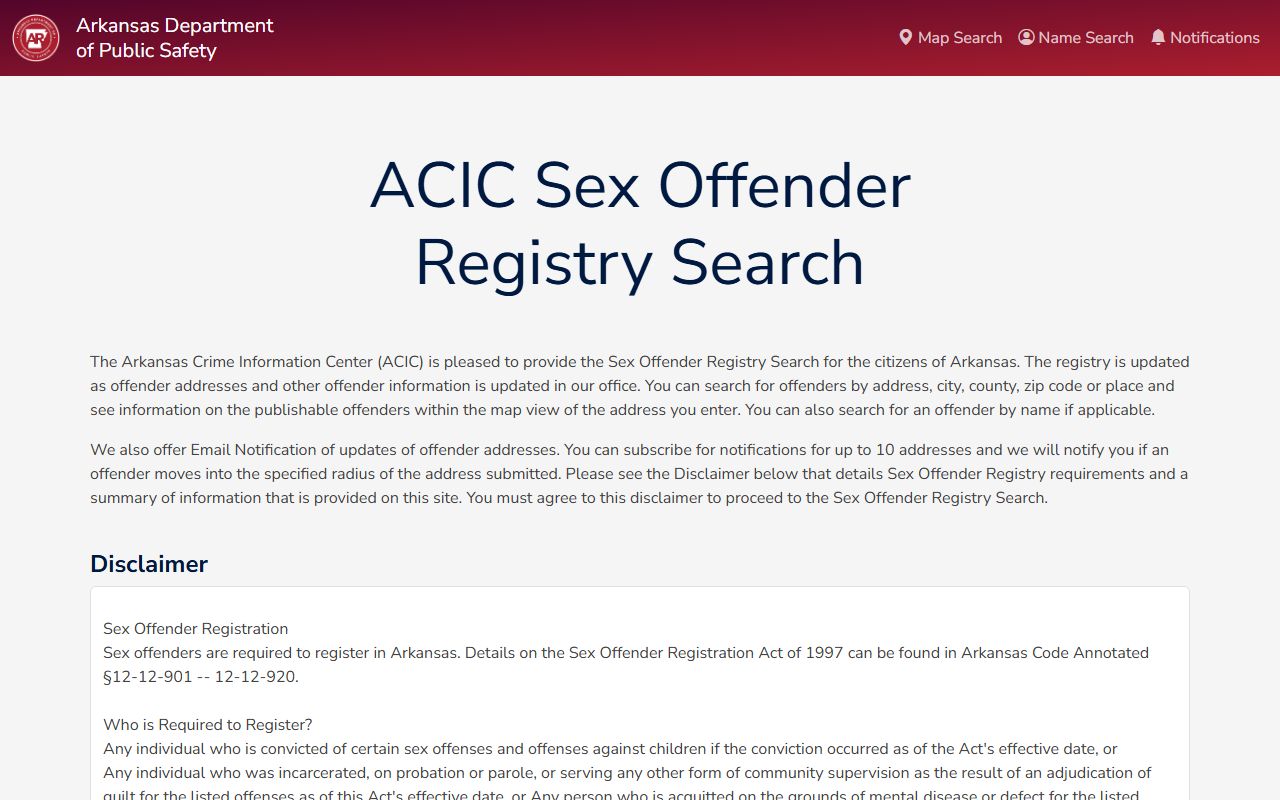
The registry search page above lets you check registrants near a Washington County address. Open it at the Arkansas sex offender registry. Arkansas law on registration sits in Ark. Code Ann. § 12-12-901 et seq., which sets the public-notice obligations for registered offenders. For released-inmate alerts, the released inmates page covers VINELink notifications.