
Arkansas FOIA and Washington County Records
The Arkansas Freedom of Information Act is the backbone of public access in the state. It declares public records generally open unless a statute carves out an exemption. Citizens can ask to inspect or copy records held by a public agency, and a denial can be challenged in circuit court. The act lives in Ark. Code Ann. Title 25, Chapter 19, with the definitions in section 25-19-103 and the core inspection rule in section 25-19-105.
So a county budget, a meeting record, or a sheriff administrative file usually starts under FOIA. You do not have to explain why you want a record. The Attorney General's FOIA resources explain the rules in plain terms, and the full code is on the Arkansas Code site.
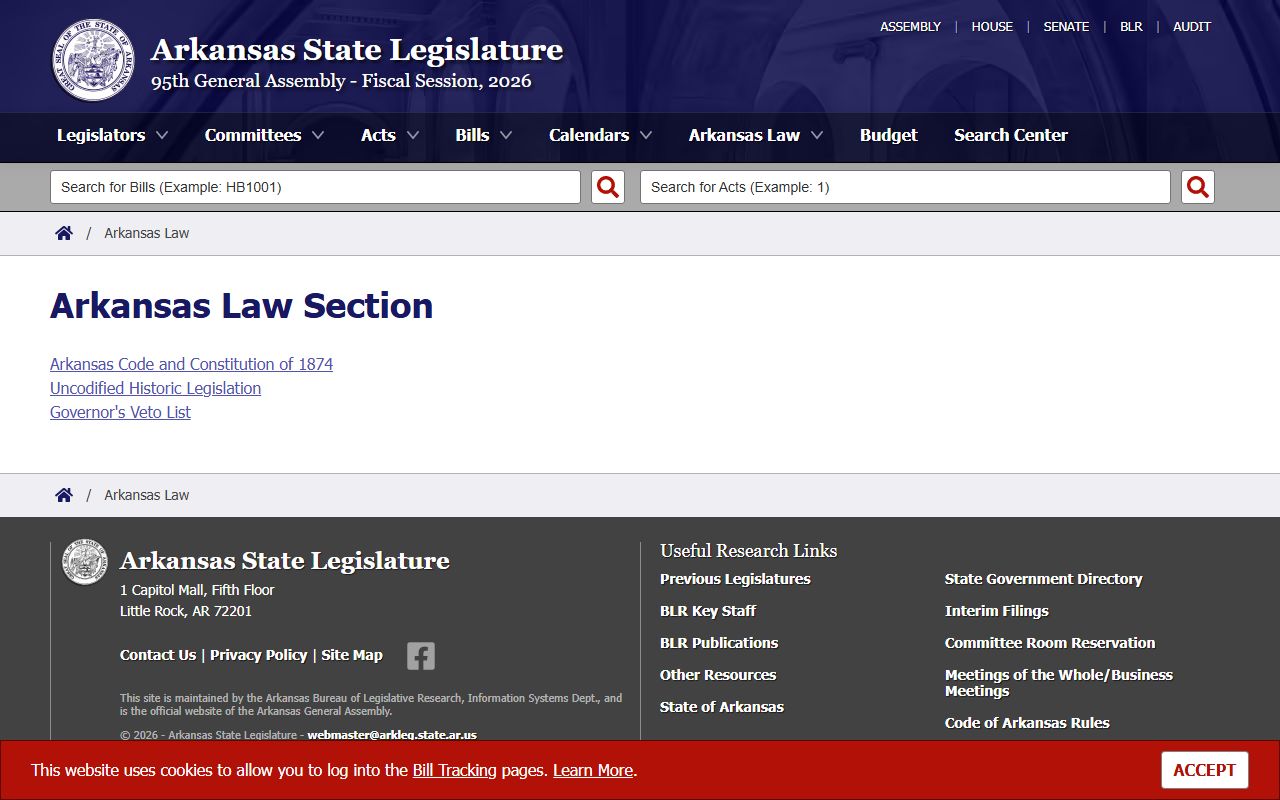
The official Arkansas Code page above is where you read the FOIA text and search by section. It is the source to trust over any secondhand summary.
Court Records Under Administrative Order 19
Court case files do not run under FOIA. They follow Arkansas Supreme Court Administrative Order No. 19, which governs public and remote access to court records, confidential information, and redaction. So even though a clerk holds the file, the access rules come from the court, not the open-records act. That split is why a county budget and a court case file are requested in different ways.
The order keeps most case data open while protecting identifiers and sensitive categories. You can read the Administrative Order No. 19 in full. For the case search itself, the court records page covers Search ARCourts and the Circuit Clerk.
What County Records Are Public
The county clerks keep more than court files. The Circuit Clerk records real estate documents like deeds, mortgages, liens, and UCC filings, along with court records. The County Clerk keeps marriage licenses, quorum court records, and county administrative filings. The Sheriff keeps jail and warrant records. County offices keep budgets and meeting materials. The list shows the records people request most outside of court cases.
- Deeds, mortgages, and liens recorded by the Circuit Clerk.
- Marriage licenses and quorum court records from the County Clerk.
- County budgets and financial documents.
- Sheriff jail rosters and warrant lists.
- Meeting agendas and minutes.
For marriage records, see the County Clerk page. For recorded documents and court files, see the Circuit Clerk page. The key is to match the record to the office that creates and keeps it. A request sent to the wrong office gets bounced or delayed, while a request aimed at the right office moves faster. When you are unsure, the county's main site lists each department and what it handles.
How to File a Public Records Request
A FOIA request does not need a special form, but a clear written request gets a faster answer. Name the records you want, give a date range, and say how you want to receive them. Send it to the office that holds the records. The steps below outline a clean request.
- Identify the office that holds the record you want.
- Put the request in writing, with specific records and a date range.
- State whether you want to inspect or receive copies.
- Give your contact details for a fee quote and delivery.
- Submit the request and keep a copy with the date.
- Pay any copying fee the office quotes.
Court forms for case-related needs are in the Arkansas court forms library. For agency records, contact the office directly.
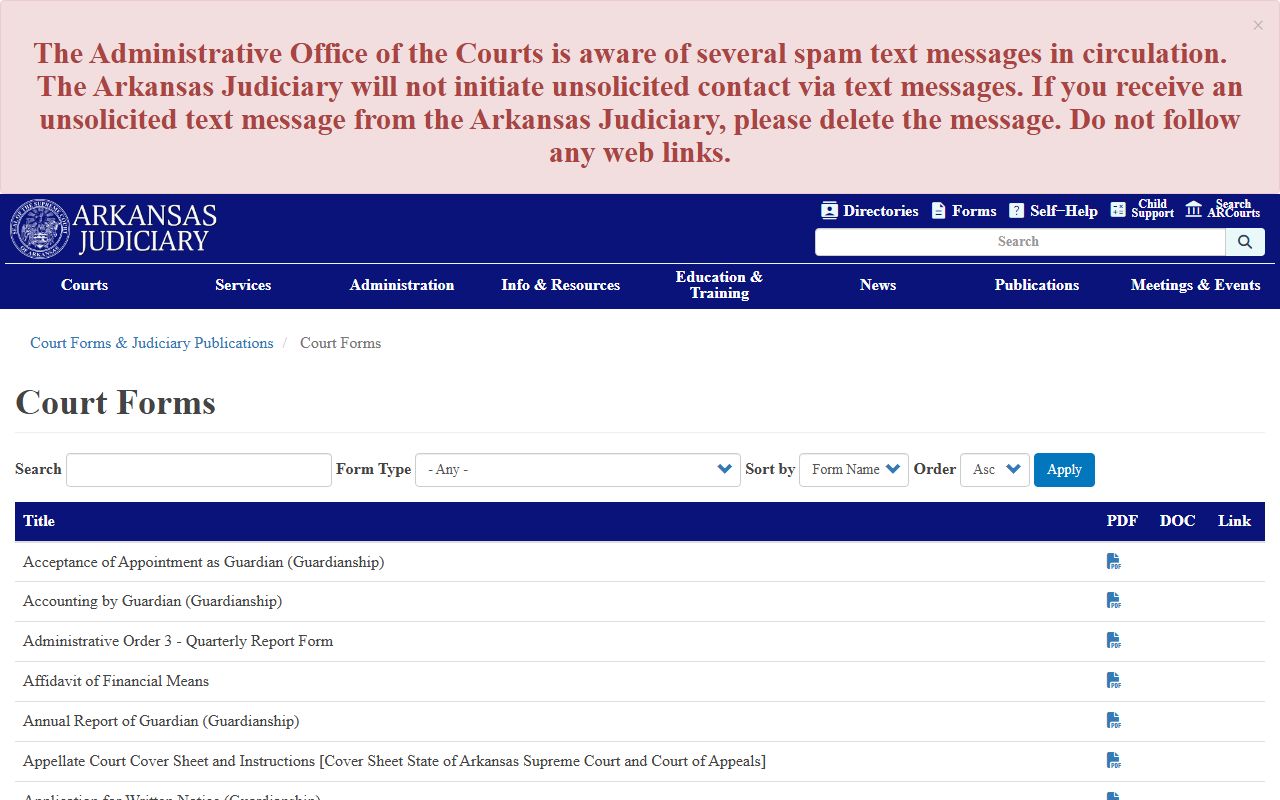
The Arkansas court forms library, shown above, holds the statewide forms for court-related requests and filings. Pair it with a written FOIA request for agency records.
Public Records Request Fields
Whether you use an office form or a written letter, include the same core details. The table lists the fields that help an office find and deliver the records.
| Field | Required | Notes |
|---|---|---|
| Requestor name | Likely | Full legal name or business name. |
| Mailing address | Likely | Needed for mailed copies. |
| Phone or email | Likely | Needed for a fee quote and delivery. |
| Records requested | Yes | Describe the records and a date range. |
| Delivery method | Yes | Inspect, pick up, mail, or email if allowed. |
| Payment | Yes | Follow the office's accepted methods. |
Public Records Fees
FOIA fees generally relate to copying and reproduction, plus special requests. Court copy fees are set by the Circuit Clerk's schedule. The specific amounts were not captured in the official sources reviewed here, so confirm the current charge with the office before you order. The table shows the common items and where each fee is set.
| Item | Office | Where to Confirm |
|---|---|---|
| Plain copies | Holding office | The office that holds the record |
| Certified court copies | Circuit Clerk | Circuit Clerk fee page |
| Recorded document copies | Circuit Clerk | Circuit Clerk fee page |
| Special or large requests | Holding office | Quote from the office |
See the Circuit Clerk fee page for court and recording amounts.
Response Times and What to Expect
Arkansas FOIA is built for prompt access, not long delays. An office is expected to respond to a request for existing records without undue delay, and to make open records available for inspection during normal hours. A simple request, like a recent meeting agenda, may be filled the same day. A large or complex request, like years of financial records, may take longer and may carry a copying charge.
A few habits make the process smoother. Be specific about what you want, so the office is not guessing. Offer to inspect records first, since inspection is often free and lets you pick only the pages you need to copy. Keep a dated copy of your request, which matters if you ever need to show when you asked. If the records are court files rather than agency records, the access path runs through the clerk and the court rules instead of a FOIA letter.
Exemptions and Confidential Records
Open does not mean everything. FOIA and other statutes shield several categories. Personnel and privacy records, active law-enforcement investigation files, and security records can be withheld. On the court side, juvenile cases, adoption files, sealed and expunged records, and certain mental health records are restricted. Personal identifiers like Social Security numbers and financial account numbers are redacted.
So a response may come back partly redacted or partly denied, with the open portion released. The law tries to balance public access against privacy, safety, and active investigations. The fact that one part of a file is closed does not close the rest. An office should release what it can and explain what it holds back, rather than denying an entire request because a single piece is exempt.
Denials and Enforcement
If an office denies a request, you have options. Arkansas FOIA allows a person to sue to enforce the right of access, under Ark. Code Ann. § 25-19-107. Courts, not the Attorney General, decide disputes, though the Attorney General publishes guidance that many offices follow. A denial should point to the exemption it relies on, which helps you decide whether to challenge it.
Note: A denial under Arkansas FOIA can be challenged in circuit court, and the agency should cite the specific exemption it relies on.
Privacy Redactions and Record Retention
Even open records get cleaned up before release. Administrative Order 19 and privacy statutes require offices to redact Social Security numbers, financial account numbers, protected birth-date data, minor identifiers, and certain addresses. That is why a released document may show black bars over personal details. Record retention is set by judiciary rules and schedules, including Ark. Code Ann. § 16-10-211, so older records may have been archived or moved.
If a record you want seems missing, ask whether it was archived, retained off site, or never created. Sometimes the answer is a retention schedule rather than a denial. Knowing this helps set expectations: a very old record may simply be beyond its retention window, while a recent one should be readily available during normal office hours.